Disappointed Optimists
Every time I give a talk on design, someone finds me afterward. They wait out the handshakes and the business cards, and then they ask a version of the same question. How do I make THEM do things the RIGHT WAY?
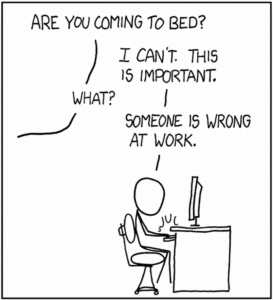
(this happens with other disciplines too, but it ALWAYS happens when I talk to designers.)
I never have a good answer. Sometimes I talk about persuasion, sometimes social capital. But only recently I feel comfortable enough to say it is a cursed problem (more on that in a bit, keep reading.)
I teach a class called Design for Behavior Change. But let me tell you a secret: all design is behavior change.
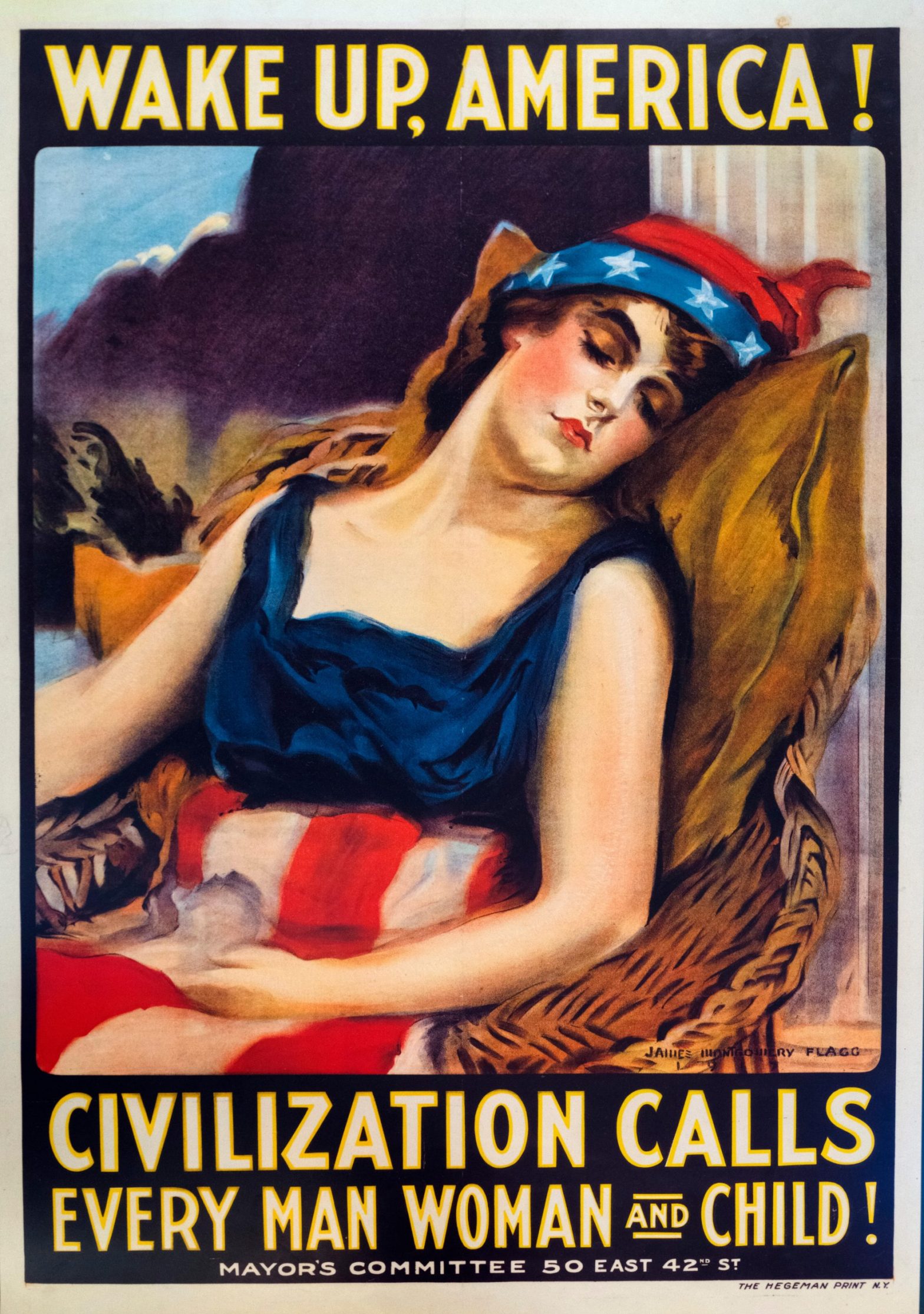
I don’t care if it’s a book cover or a poster, an advertisement or a social media site. Everybody’s trying to change something. A huge percentage of the time, the thing they want to change is your wallet. If you are a designer, this is your fate. I know we talk all the time about beauty and balance, gestalt and saving the world. But most of us are just trying to get people to buy stuff.

Which means that taking a design job is committing to change people in whatever direction the company wants. And if the company is a public one, what it wants is shareholder value. You can tell yourself you’re user-centered. You can tell yourself you’re making users’ lives easier, and on good days that’s even true. You can’t deny that the user research, the accessibility audit and the beautiful empty state are all in service of a number that has nothing to do with whether anyone’s life got better.
B corps are better. As long as they stay B corps. (Look at Etsy.) Nonprofits are the honest version, almost restful in their clarity. You are definitely committed to behavior change there. It’s just that the behavior might be a social good… It also could be in service to fundraising. If you think money is icky, don’t be a designer. Money is oxygen for organizations.
Fact: you never know who is really a mission-driven company until you’re on the inside. When I was at LinkedIn in the early days, it was very much a mission-driven company. Before LinkedIn you had to decide to quit and start job hunting to improve your lot in life. LinkedIn let great jobs find you instead.
I’m not sure LinkedIn is still a mission-driven company. When I’m on the feed I feel like I’ve left Twitter for somewhere just as annoying and less authentic. It does have a lot fewer Nazis, which is nice.
Disappointed optimists
Lenny Rachitsky and Noam Segal ran their second annual tech worker survey this month, and designers landed at the epicenter of the misery. Highest exhaustion of any role. Sharpest sense of being asked to do more for the same money. Worst-rated managers in the survey. And, along with researchers, the least willing of anyone to tell a newcomer to follow them in.
That last one is the strange one. Most of these people are personally fine. What they won’t do is tell a younger person to follow in their footsteps. Segal put it as a ladder: the tools (looking at you, GenAI) keep climbing the rungs, and they pull each rung up behind them as they go. If you’re already high up, you feel safe. If you’re near the bottom, the rung you were about to step on is gone. So a designer can be okay and still look at the kid behind them and say, don’t. The water’s fine. Don’t get in.
Their own explanation is mostly about AI and about bad management, and I’d be misrepresenting the data if I claimed it proves my point. One line from the survey does stick with me, though. AI lowered the floor of what anyone can produce, but it didn’t raise the ceiling of what’s good. So you ship more and none of it is better, and if you’re the kind of person who got into this to make good things, that’s its own specific kind of tired.
I’ve been watching designers be unhappy since well before anyone had to argue with a chatbot about a design system, so let me offer the older theory.
I’d argue they’re disappointed optimists, and that the disappointment is part of the job and part of why they’re any good at it. Designers always see the world as it could be. How could they be anything except disappointed that the world is the messy, sometimes corrupt, often moneygrubbing place that it is?
It is a Sisyphean struggle to constantly try to make good things happen in bad places.

It’s a cursed problem
There’s a great GDC talk by Alex Jaffe called Cursed Problems in Game Design. A cursed problem, in his definition, is an unsolvable design problem rooted in a conflict between two promises that can’t coexist. You made both promises, on purpose, and they contradict each other, and no amount of clever tuning gets you out. You can only cut through it and give something up.
His example is a free-for-all fighting game. You promised players a test of combat skill, and you promised them a game worth winning. But the way you win a free-for-all is politics — alliances, betrayal, ganging up on the best player — so the two promises eat each other. You can’t fix it with a patch. You can only decide which promise to sacrifice.
Design-as-a-career is a cursed problem. You want to make the world as good as you can see it could be. You want a paycheck from an organization whose actual job is to produce shareholder value. Those don’t coexist. There is no magic phrase, no framework, no seat at the table that dissolves the conflict, because the conflict is the premise. And the corporate version is darker than Jaffe’s. In his talk the designer holds the knife and chooses what to cut. At your company the choice was already made, and the thing that got cut was the user. You’re the promise it kept just well enough to keep you from quitting. You are the marshmallow in the fire.
So stop looking for the solution. There isn’t one. What’s left is the only useful question, which is what you’re actually willing to give up.
Think of the company as a bad boyfriend. You can leave him. You can go find a better one. You can try to build a better one from scratch, which is its own kind of gamble. Or you can stay and try to change him, which mostly ends the way you’d expect. Those are the four options. They’re all sacrifices, and none of them makes the problem stop being a problem.
Stay and change him
The option that isn’t leaving but isn’t giving up either is to be a dissenter on the inside. Nudge the bad company toward less bad. This is real work, it sometimes moves things, and I want to be honest about both halves of that sentence.
Richmond Wong at Berkeley interviewed twelve UX people at large tech companies about exactly this and wrote up what they actually do, in a paper called Tactics of Soft Resistance. It is the closest thing I’ve found to melatonin for guilt-related insomnia. Three of the tactics are worth stealing.
The first is translation. One researcher in the study found that arguing something was good for the user had a short shelf life, but the moment she could show it was costing revenue, the product team was suddenly willing to have the meeting. Another took her worry about the warehouse workers stuck using her company’s software and reframed it as reputational risk to the company, borrowing her employer’s own stated corporate value of trust to do it. That isn’t selling out. It’s learning the only language in which your concern is audible. If you want to get good at it, read Rich Mironov’s Money Stories, which is about teaching makers to talk about their work in the terms executives actually use. It’s under ninety pages, which matters when you’re the most tired role in tech. OK, Rich is a friend and I blurbed the book. He’s still right.
The second is the ethical debt log. A senior researcher at an edtech company started keeping a backlog in Jira of the social issues her team had surfaced and then quietly not acted on, and brought them up again and again. Her manager loved it. Ethical debt, filed next to technical debt, in a system the executives already read.
The third one I get to be smug about. A senior designer pushed to write cultural outcomes into her product org’s OKRs as an explicit objective with key results underneath, and the org went for it. Someone at a research meetup put it more bluntly: you have to be in the room when the OKRs get defined. I have spent years arguing that OKRs are how a company decides what it actually cares about. Apparently they also work as a crowbar.
Wong is careful about what these tactics are not. They work by borrowing the company’s own logic, which means they never lay a finger on the logic itself. The people doing this described it as exhausting and repetitive, one of them calling it futile and necessary in the same breath. And nine of the twelve people interviewed were women or non-binary, which tells you something about who ends up doing the emotional labor of caring out loud.
So learn the business model, well enough to know which lever your work is attached to and which number your VP gets judged on. Then spend the five or ten years. Patient persuasion and proof, social capital, trust from execs and peers, nudging things along.
Honestly, I don’t have data that any of this works and neither does Wong. What I believe, after a couple of decades of watching, is that if you’re patient and stubborn and you have the right allies, you can improve your local environment. Your team. Your product. That is not nothing. But the rot at the top is untouchable unless you are the top, and even then culture eats strategy for breakfast. You can make him a better boyfriend. Don’t ever bet on him becoming the one you wished for.
Leave, or find a better one, or build one
If staying and nudging isn’t enough, the other three sacrifices are on the table, and each costs something real.
You can leave. Straightforward, except you give up the paycheck, and in this economy that’s not a small thing to hand-wave past. I’m not going to tell a stranger with rent to walk. But the survey I mentioned is blunt about where the happy people are, and it isn’t the big logos.
You can go find a better one. Somewhere less actively harmful. There’s no shame in a company that isn’t changing the world as long as it isn’t wrecking it either, where you can do work you’re proud of and go home at a reasonable hour. Sometimes what really matters is the paycheck and the craft and getting to close the laptop, and that is a completely honest answer to the cursed problem. You gave up the fantasy that the job would also be your mission. Plenty of people are happier the day they do.
A quick opinionated word on non-profits. First, you have to pay the passion tax. They all pay less than for-profit companies (unless they are janky, which happens.) And all the ones I’ve worked for are disfunctional in a way I personally can’t tolerate and yes, that’s a weakness on my part I suppose. Right now I am at a university which is a happy compromise. I’m paid less than everyone in industry and I am happy as the proverbial clam.
Choice 3: you can build one. Start your own thing, which is more possible than it has ever been. The founders in that survey are the happiest people in tech. (Read that carefully, though: Lenny only surveyed people who are founders right now, so everyone whose startup died is not in the room to comment.) You trade the bad boyfriend for the risk of becoming one yourself. If you get popular enough that the vibe-coded stuff starts breaking, hopefully you’re popular enough to hire a real engineer.
And if you do build one, build it so it can’t rot. This is the whole argument of Eric Ries’s new book, Incorruptible. His point is that companies don’t go bad because bad people take over. They go bad because the structure rewards extraction, and eventually someone “rational” shows up and does the extracting.
When you start a company, someone hands you a stack of boilerplate incorporation documents, and you sign them, because you have a product to build and no reason to think the default is an important choice. But it is. The boilerplate is the extraction structure. You wired your company to rot on day one and didn’t even notice, and by the time you’re big enough for it to matter, it’s too late to change. So if you’re going to build, treat the legal structure as a design decision, not paperwork.
None of these is a fix. There is no fix. It’s a cursed problem, and the only move is to decide, on purpose and with clear eyes, which promise you can live without. If you are tired of being disapppointed and you’re still an optimist, take some time of to look at your situation with clear eyes. Do you really need the free food and foozball table? Do you really need the great health insurance? Are you young and able ot take on risk? Is it time to start planning for retirement (it’s always time to start planning for retirement, fyi.)
Figure out what really matters to you. Then pick your compromise. It’s ok.